Productivity Game

Learn to Thrive

  • Twitter
  • YouTube
  • Purpose
  • The Academy Membership
  • My Account
Home 2016 Archives for May 2016

Archives for May 2016

Nathan Lozeron May 30, 2016

10 Time-Defending Responses

Being busy is not the same as being productive.

If you examine your day you’ll notice that 80% of your time is being filled with low-return activities.

To prevent your time from being eroded by low-value activities you need to say ‘no’ more often. However, saying ‘no’ can damage a personal relationship.

Here are 10 responses you can use to defend against incoming requests and protect your time – WITHOUT damaging relationships.

  1. “If I say yes to this, I’ll be saying no to ___”

    • Works well when asked to make large time commitments: “Unfortunately if I say yes to this project, I’ll being saying no to my __(health, family, etc.)__, and I am not willing to do that at this time.”
  2. “No for now, but I’ll let you know if something changes.”

    • You leave the person with a feeling of hope and make less likely to persist with the request.
    • Your response isn’t a lie because if circumstances do change you might want to accept their request.
    • This is a great default response to avoid taking on too much but still leaving your options open.
  3. The graceful “No”:

    • Start with warmth: “Thank you for your consideration.”
    • Continue with your Yes: “I am currently committed to …” (goal, project or appointment)
    • Follow-up with your No: “Because of this I need to decline.”
    • End with warmth: “I wish you all the best in finding someone else.”
  4. “Just so I understand, you want me to ____” (defending against ridiculous requests)

    • By rephrasing the request you force the person to see their request from a different perspective. This can help them see how unreasonable their request sounds. I use this response to defend against taking on impossible tasks.
  5. Anti-chitchat: “Hi ___, I’m in the middle of something, what did you want to talk about?”

    • Useful when someone ‘pops by your desk to chat’ and you need to work.
    • Useful when answering phones calls and avoid small talk (however, small talk can sometimes be beneficial to maintain a friendly relationship). 
  6. “Sorry I’m busy at the moment, but have you tried ___?”

    • Providing them with an alternative is a great way to turn down a request and not damage the relationship.
    • A similar response might be: “I’m too busy to do that right now, but I can’t give you with the following resources: ___”
  7. “Due to my high workload, I must decline.”

    • Works well when asked to take on too much work: “Due to a high workload, I am unable to take on new projects at this time. I will have more availability after ___”
    • Works well as an email auto-responder and reduce the amount of time you spend in your inbox: “Due to a high workload, I am only responding to emails between 4pm-5pm. If it’s an emergency please call my cell at 333-333-3333.”
    • Also works well as a voicemail greeting: “Due to a high workload, I am only responding to messages between 4pm-5pm. If it’s an emergency please call my cell at 333-333-3333.”
  8. “Sorry, I have another commitment.”

    • Know your commitments in advance. Review your weekly calendar each morning and whenever you receive a request.
    • It is OK to use this response when you have a personal commitment that isn’t on your calendar. This includes time to simply rest and recover.
  9. “I don’t do ____” (avoid using “I can’t…” or “I shouldn’t…”)

    • “I don’t” is a hard and fast personal rule that people interpret as being part of your identity. Therefore, people are less likely to talk you into accepting the request.
    • An alternative form: “I have rule: I don’t ___”.
    • Great for turning down undesirable social events: “Sorry I don’t go out on Monday’s” or “Sorry I don’t do carnivals.”
    • Saying “I can’t” usually means your lying – saying that you can’t go somewhere often means you don’t feel like going somewhere. People will interpret your “I can’ts” as misleading statements and lose respect for you.
    • Saying “I shouldn’t” leaves your response open for debate. When you say “I shouldn’t eat ice cream” the person offering you the ice cream will likely persist and give you a few good reasons to eat it (“it’s delicious!”), causing you to eventually say yes and later regret it.
  10. Long pause. Think. Then respond: “Unfortunately I need to say no”

    • This response makes the requester believe that you’ve seriously considered their request. Your delayed leaves them feeling less rejected and less likely to talk you into accepting the request.
Filed Under: All Personal Articles

Nathan Lozeron May 25, 2016

Sprint

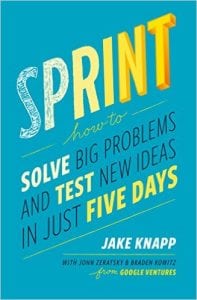
Sprint book

Sprint by Jake Knapp

No problem is too large for a sprint.“ – Jake Knapp

Google Ventures invests $300 million dollars in start-ups each year. To protect their investment Google Ventures helps these start-ups solve big problem and test new product ideas.

In an effort to solve problems and test new products quickly, Google Ventures designers Jake Knapp, John Zeratsky, Braden Kowitz have designed a rapid problem-solving method called ‘Sprint’.

Watch the following video to understand how you can solve big problems in just 5 days:

1-Page PDF of ‘Sprint’ Problem-Solving Techniques

Filed Under: All Book Animations, Business, Creativity & Innovation, Decision Making & Problem-Solving

Nathan Lozeron May 23, 2016

Living an Antifragile Life

Antifragility is the ultimate weapon to fight overwhelm and uncertainty in your life.

Understanding and embracing antifragility can radically alter your life.

What exactly is ‘Antifragility’?

In the book ‘Antifragile’, author Nassim Nicholas Taleb describes an antifragile system as a system that improves by encountering small stressors.

Being antifragile is different than being resilient.

Resilience is having the ability to withstand challenges and setbacks without being worse off afterwards.

Antifragility is the ability to not just withstanding challenges and setback but thrive as a result of them.

When we are antifragile stress doesn’t break us down, it breaks us up.

Nassim says that you have a robust system (high antifragility) when the accumulation of small mistakes has a high potential upside and very little downside.

Your body is Antifragile

Your body is the perfect model of antifragility.

  • UV Radiation in small doses repairs tissues and generates vitamin D (a vitamin that is essential for every cell in your body).
  • Exposure to germs and bacteria build the body’s immune system.
  • Stressing a muscle causes it to grow.
  • Struggling to understand a concept makes it more likely that we will remember it.
  • The stress of running releases BDNF: a protein that causes your brain to grow new neural connections (read this article if you want to learn more about BDNF)

Emotional Antifragility

The concept of ‘antifragility’ is critical to our physical AND emotional health.  Embracing small stressors forge mental toughness. 

There are two areas of life that I focus on to stay emotionally Antifragile:

  1. Relationships
  2. Work

Relationships

Focusing on several relationships results in low Antifragility

Having an abundance of relationships is exciting at first. However, the more relationships you maintain the more these relationships become ‘surface level’ relationships. Maintaining a large number of relationships accumulates stress in your life while providing no outlet for that stress.

Why?

Maintaining many friendships means you are not spending the time needed to forge deep friendships with a select few people. Deep relationships allow you to be open and honest and act as your support system.

Focusing on key relationships is Antifragile.  

Slight stressors injected into a deep friendship causes that relationship to grow stronger.  

Why?

Deep friendships have a foundational trust and respect that enable them to endure stress. Over time, stress actually increases the strength of the social bond. Stressful experiences become stories of triumph and growth.  

Allowing too many people into your life weakens your key relationships because key relationships need time. The weaker your relationships, the more fragile you are.

Work

Choosing to work at a large corporation introduces fragility into your career

When you work at a large corporation your small failures can easily be overlooked. When small failures are ignored you are unlikely to properly learn from them. Over time, the accumulation of small failures leads to an unexpected layoff.

At this point, you are without a job, your skills are weak and you have a poor reference for the next job interview.

Generally speaking, large corporations are slow to react to small stressors. Over time, small stressors accumulate to the point where a large corporation has a crisis. When this occurs you were out of a job and there is nothing you could do about it.

Working as an entrepreneur is Antifragile

Each small failure accelerates skill development because each failure is painfully obvious.

Small failures cause you to quickly improve your business model. Iterative improvements caused by a series of small failures increase your odds of success.

The accumulation of failures may cause your business to fail but at least you walk away with a set of tested skills. Over time, these skills could lead to a business breakthrough, allowing you to achieve financial freedom.

Seek Antifragile Situations

Seek out situations where small failures are obvious:

  • Break down your projects into smaller components. Aim to work in small teams with reduced scope.
  • Continuously prototype and test your products ideas by interviewing target customers (watch my animated summary of the book ‘Sprint’ to understand how).
  • Learn a skill by doing it and not being afraid to initially look bad.

Avoid situations where the small stressors are hard to detect:

  • Over-committing to large complex projects (in such projects small failures can go undetected and accumulate to cause catastrophic failures).
  • Working on a new product idea without engaging the target customer for feedback.
  • Learning a new skill by reading about it instead of actually doing it (ex: trying to learn soccer by reading books on the physics of soccer).

The ONE Takeaway

Stress causes Antifragile systems to thrive.

Set up your life to notice small stressors and see them as a way to accelerate growth. Think of yourself as a comic book character who has a special ability: the stress and setback you encounter makes you stronger, faster, better.

Filed Under: All Personal Articles

Nathan Lozeron May 20, 2016

Change The Default Mode

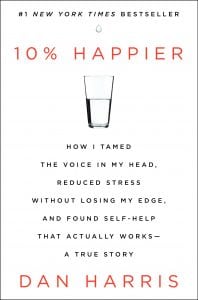
10% Happier by Dan Harris

10% Happier by Dan Harris

There’s a reason why businesspeople, lawyers, and marines have embraced meditation. There’s no magic or mysticism required—it’s just exercise.” – Dan Harris

Folks in silicon valley are calling it the ‘new caffeine’. Fortune 500 CEO’s and Hedge Fund managers claim meditation makes them more effective.

Despite all the good press regarding meditation you still might not be doing it because meditation just seems too mystical or ‘woo-woo’. In the book 10% Happier, author Dan Harris (co-anchor of the ABC News show: Nightline) demystifies mindfulness and meditation.

The following video will help you see meditation in a new (more productive) light:

1-Page PDF Summary of 10% Happier (how to mediate)

Filed Under: All Book Animations, Success Psychology

Nathan Lozeron May 3, 2016

Mastering Meta-Learning

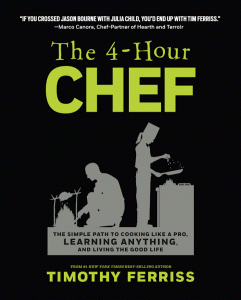
4 hour chef

The 4-Hour Chef by Tim Ferriss

It is possible to become world-class in just about anything in six months or less. Armed with the right framework, you can seemingly perform miracles, whether with Spanish, swimming, or anything in between. ” – Tim Ferriss, 4-Hour Chef

Want to learn a new skill…fast?

Tim Ferriss has written a cookbook to help you learn ANY skill, not just cooking. His accelerated learning method will help you master a skill (be in the top 5% of the world), in record time.

Watch the following video to discover how you can accelerate the skill development process (1-Page PDF summary is listed below):

1-Page PDF Summary of ‘The 4-Hour Chef’

Filed Under: All Book Animations, Learning & Skill Development

Categories

newsletter

Receive the latest 1-Page PDF book summaries and a FREE copy of my ebook: "5 Steps to Finding Your Workflow"

About Me

Nathan Lozeron

Student. Engineer. Project Manager. Entrepreneur. Storyteller. Read More

Recent Posts

  • The Creative Act
  • Traction
  • Stolen Focus
  • The Expectation Effect
  • Storyworthy

Recent Posts

  • The Creative Act
  • Traction
  • Stolen Focus
  • The Expectation Effect
  • Storyworthy

Recent Comments

    Archives

    • April 2023
    • December 2022
    • October 2022
    • September 2022
    • August 2022
    • March 2022
    • November 2021
    • June 2021
    • December 2020
    • October 2019
    • June 2019
    • May 2019
    • April 2019
    • March 2019
    • February 2019
    • January 2019
    • December 2018
    • November 2018
    • October 2018
    • September 2018
    • August 2018
    • July 2018
    • February 2018
    • January 2018
    • December 2017
    • September 2017
    • August 2017
    • July 2017
    • June 2017
    • May 2017
    • April 2017
    • March 2017
    • February 2017
    • January 2017
    • December 2016
    • November 2016
    • October 2016
    • September 2016
    • August 2016
    • July 2016
    • June 2016
    • May 2016
    • April 2016
    • March 2016
    • February 2016
    • January 2016
    • December 2015
    • November 2015
    • October 2015

    Categories

    • All Book Animations
    • All Personal Articles
    • Business
    • Creativity & Innovation
    • Decision Making & Problem-Solving
    • Leadership & Influence
    • Learning & Skill Development
    • Motivation & Behavior Change
    • Success Psychology
    • Time Management
    • Uncategorized

    Meta

    • Log in
    • Entries feed
    • Comments feed
    • WordPress.org

    © Copyright 2018 Lozeron Academy Inc. Production · All Rights Reserved