Productivity Game

Learn to Thrive

  • Twitter
  • YouTube
  • Purpose
  • The Academy Membership
  • My Account
Home Archives for 2016

Archives for 2016

Nathan Lozeron June 23, 2016

Attitude of Ownership

Extreme Ownership
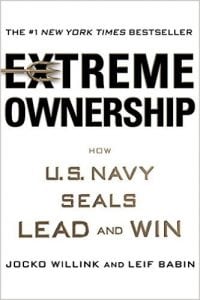
Extreme Ownership by Jocko Willink & Leif Babin
There are no negative repercussions to Extreme Ownership.” – Leif Babin, Extreme Ownership

Extreme Ownership is accepting responsibility for everything that could impact your team’s success and your success. It’s a heavy burden to bear, but it’s what all great leaders do.

In the follow video I’ll explain how accomplished Navy Seals, Leif Babin and Jocko Willink use Extreme Ownership to win on the battlefield and why you should adopt an Extreme Ownership mindset in your life:


1-Page PDF Summary of Navy Seal Leadership
Filed Under: All Book Animations, Leadership & Influence

Nathan Lozeron June 20, 2016

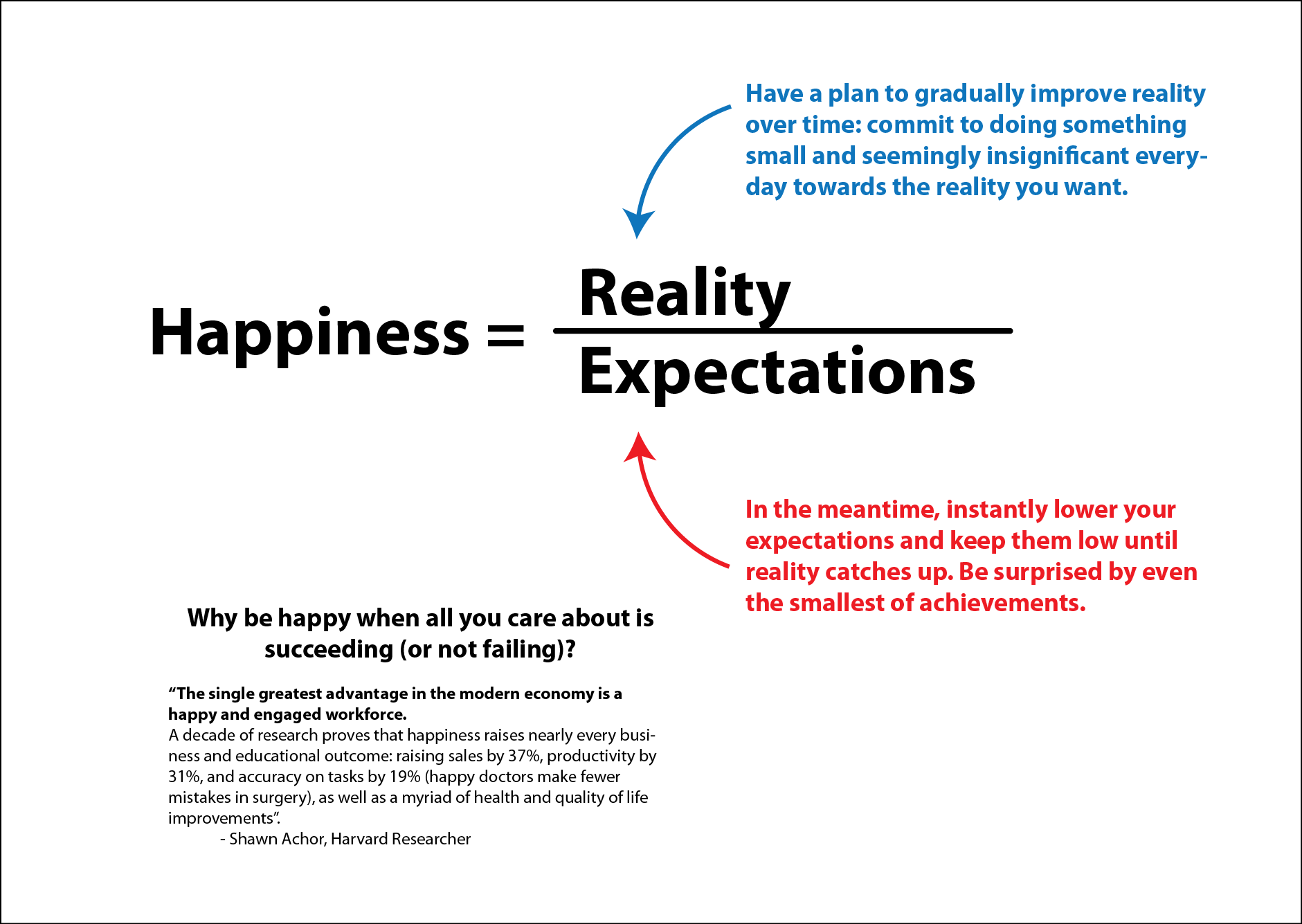
Happiness Equation

Happiness

Inspired by James Altucher

Filed Under: All Personal Articles, Success Psychology

Nathan Lozeron June 16, 2016

Grow Your Grit

book

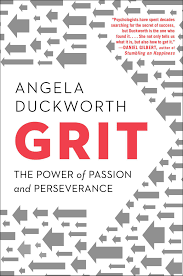
Grit by Angela Duckworth

The most dazzling human achievements are, in fact, the aggregate of countless individual elements, each of which is, in a sense, ordinary.” -Angela Duckworth, Grit: The Power of Passion and Perseverance

Our society causes us to believe that talent leads to great performances. We tend to marvel at the natural talent of others and overlook the importance of effort. Surveys show that people commend effort, but don’t actually believe it can compete with natural talent.

Angela Duckworth challenges this belief by researching top performers and documenting her findings in the book ‘Grit.’ I’ve taken the time to summarize ‘Grit’ into the following core message (video + 1-page PDF):

1-Page PDF Summary of Grit

Filed Under: All Book Animations, Success Psychology

Nathan Lozeron June 13, 2016

Eliminating Overwhelm: 7 Questions to Ask Yourself

When you’re feeling stressed and overwhelmed by a mountain of ‘to-dos’, try asking yourself the following list of questions (core questions plus ‘–>’ follow-up questions):
Get out a piece of paper or open up a Word file and answer the following questions by writing down whatever comes to your mind (stream of consciousness exercise):

Replacement Plan:

“If I got sick who would end up doing my work?”
–> “Would all of it need to get done?”
–> “Would some of my work be completed 80% as well by someone else?” (virtual assistant, junior staff in the office, contractor, etc.)
If so, find/hire that person and give them the majority of your work so you can focus on high-value activities that other people find difficult to replicate.


Fear-setting:

“What’s the worst that would happen if I failed at this?”
Write out the scenario with as much detail as possible – who’s involved and what does it look like.
–> “How certain am I that it would be that bad? How can I be so sure?” (poke some holes in your logic)
–> “How likely is it that I would bounce back? Have I bounced back from a similar event in the past? Is this time really that different?”


Non-Doing:

Isolate each ‘to-do’ item and ask yourself: “What if I simply didn’t do it?”
–> “What effect would that have 10 Days From Now?”
–> “How about 10 Months From Now?”
–> “How about 10 Years From Now?”
Asking this question helps you realize that many things that you deem ‘critical’ have very little impact on your future. Asking this question helps you realize that very few things have a major impact on your life.


Memento Mori:

Sorry to be the bearer of bad news…but we’re all going to die someday :).
Death shouldn’t be something to scare you into doing something rash, but to help you remember what’s truly important.
Remembering that I’ll be dead soon is the most important tool I’ve ever encountered to help me make the big choices in life.
Almost everything–all external expectations, all pride, all fear of embarrassment or failure–these things just fall away in the face of death, leaving only what is truly important.” – Steve Jobs
 “Knowing that I’ll be dead soon, what’s truly important in my life?” (even if you die in 40 years, those years could go by quickly)


Just ONE Thing:

Make a list of everything you need to do at this moment.
Look at the list and ask yourself:
“What ONE thing makes everything else seemingly unimportant or irrelevant at THIS TIME?”
–> “What’s not absolutely essential at this time?”
  1. Cross out 50% of that list and re-write the remaining 50% to make a new list.
  2. Ask the question again and cross out another 50%.
  3. Continue this process until you have 1 or 2 items remaining.
Set a 25-minute timer and commit yourself to working on one thing without self-criticism, self-doubt or worry about the future. Commit to ignoring the voice in your head and just do the movement needed to do the work. If doubt or fear come up just tell yourself you can think about it later, but right now you need to focus on what you’re doing. You have permission to be worried, stressed and overwhelmed after the timer is up.
If you had more than 1 item on your list, alternate working each item until you determine which one is more important at this time.


Happy Anyways:

“It sounds crazy, but what if I didn’t need to achieve it all to be happy?”
–> “What if I could be just as happy without it?” (extra money, status, promotion, etc.)


Less is More:

“What if I could achieve more by doing less?”
This question can often turn the feeling of overwhelm into a feeling of curiosity.


**If you’d like a PDF checklist of these questions for your records click here: Overwhelm Elimination Checklist

Filed Under: All Personal Articles

Nathan Lozeron June 10, 2016

Anything You Want

Anything You Want

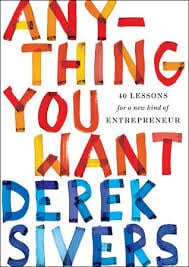
Anything You Want by Derek Sivers

Don’t be on your deathbed someday, having squandered your one chance at life, full of regret because you pursued little distractions instead of big dreams.” – Derek Sivers, Anything You Want

‘Anything You Want’ is a book about author Derek Sivers journey of accidentally starting a company and growing it into a $20 million business.

The book contains 40 lessons for aspiring entrepreneurs. I’ve condensed those 40 lessons into a three part story (5-minutes in total) to illustrate how you can start a company, grow a company and know when to leave your company:

1-Page PDF Summary of Insights from Anything You Want

Filed Under: All Book Animations, Business, Creativity & Innovation, Leadership & Influence, Success Psychology

Nathan Lozeron June 6, 2016

5 Ways to Modify Your Goal

goal target2

Does your goal inspire immediate action?

If your answer is ‘No’ then your goal could use a makeover.
Try the S.C.O.R.E. goal-setting method to inspire massive action:

Establish a Higher Standard for Yourself

Develop a higher standard for yourself by establishing a feeling or image of someone you aspire to be. As Arnold Schwarzenegger says: “Dig deep down and ask yourself ‘who do you want to be?’ Not what, but who.” It need not be a specific person. Arnold’s standard was simply being: ‘The best bodybuilder of all time.’ He lived that standard every day until the reality matched his results.

Once you establish your standard, strip all the emotion out of it. Make it simply who you are, not who you hope to be. Become indifferent to any other way of being. This makes your brain want to quickly bridge the gap between your current reality and who you know yourself to be, thus making you more likely to take immediate action.


Challenge Yourself With Something BIGGER

In the book, ‘The Magic of Thinking Big’, author David Schwartz explains the advantage of thinking big:

Big thinkers are specialists in creating positive, forward-looking, optimistic pictures in their own minds and in the minds of others.” – David Schwartz

Without big goals you’ll avoid taking the first step towards achieving something great.

Think little goals and expect little achievements. Think big goals and win big success.” – David Schwartz

Big goals are useful because they come equipped with a great fall back plan.

Shoot for the moon. Even if you miss, you‘ll land among the stars.” – Norman Vincent Peale

Modify your goal until it inspires action.

Remember: It’s not what a goal is, it’s what a goal does.


Envision the Obstacles You’ll Overcome

Envision the act of overcoming obstacles along the way. See the act of overcoming obstacles as enjoyable.

According to several studies in Dr. Gabriele Oettingen’s book ‘Rethinking Positive Thinking‘, visualizing yourself overcoming obstacles on route to your goal makes you more likely to achieve your goal than simply seeing yourself achieving your ultimate goal.

The best way to get people up and moving was to ask them to dream and then to confront them right away with the realities that stood in the way of their dreams.” – Gabriele Oettingen

Therefore, once you establish your higher standard (step 1) and aim for a BIG result (step 2), envision yourself overcoming obstacles you’re likely to face. Doing so will make you more resilient when setbacks occur and less afraid of falling short of your goal, thus making you more likely to take action.

What harsh realities are you likely to face? See those obstacles as a chance to show your skills. Get excited at the idea of eliminating the obstacles in your way.

BONUS: visualizing yourself overcoming obstacles from the ‘3rd person’ perspective will increase the likelihood of taking action by 20% according to a 2007 Ohio State University study.


Rehearse ‘When-Then’ Routines

Think: “When X occurs, I will do Y.”

Example: “When I wake up, I will put on my running shoes and gym clothes located next to my bed and go for a 10-minute run outside.”

When you rehearse a ‘when-then’ routine you are setting what psychologists call an ‘implementation intention’. Over 200 studies at Columbia’s Motivation Science Center show that we are 300% more likely to achieve our goals when we use this approach (source).

We are often slow to act because the instructions we give ourself are abstract (i.e. lose weight). ‘When-then’ routines clarify when you need to take action and what action you need to take (trigger + routine). This allows your brain to take action without hesitation.

By rehearsing ‘when-then’ routines you are effectively forming a habit. Over time, a well-formed habit seems effortless and automatic. The more we perform a habit the harder it becomes for us to not do it (consider the last time you went to bed without brushing your teeth).

Therefore, if you want to take consistent action towards your goal, rehearse ‘when-then’ routines.


Make Starting Stupid Easy

Scale back the requirement to get start to something that you consider stupid easy.

If your goal is to write more set the daily requirement for a successful writing session at 50 random words. Lowering the daily requirement makes you much more likely to start writing.

When the minimum requirement is too high (i.e. go to the gym and work out for 90 minutes every day when you haven’t worked out for 5 years), you’ll get overwhelmed and search for an easy, more pleasurable alternative (i.e. sit on the couch and eat an entire bag of Doritos).  By lower the requirements you make starting easy and allow yourself to experience a greater reward.

Examples:

Want to be a better golfer?  Make the daily minimum requirement simply to pick up a golf club and swing it once.  Any additional swings feel like a bonus.

Want to get stronger and fitter?  Make the daily minimum requirement simply to do 1 push-up. Any additional push-ups feel like a bonus.

Here’s a dirty little secret: you rarely just do the minimum. Eighty percent of anything is starting. Once started you find it easy to continue once you have momentum. By thinking of everything beyond the minimum requirement as a bonus you will feel a greater sense of accomplishment for any extra work you put in.


Most goals are a daydream, a reality you hope to achieve one day. But remember:

Hope is a start. But hope needs action to win victories” – David J. Schwartz

Use the S.C.O.R.E. framework to take more action and achieve your goals. Remember to set a higher Standard, Challenge yourself with something bigger, get excited about overcoming the Obstacles, Rehearse ‘when-then’ routines and make the starting requirements stupid Easy.

Share on LinkedIn

Share on Twitter

Filed Under: All Personal Articles

Nathan Lozeron June 3, 2016

A Rhythm for Learning

A Mind for Numbers by Barbara Oakley

A Mind For Numbers by Barbara Oakley

Your desire to figure things out right now is what prevents you from being able to figure things out…” – Barbara Oakley, Ph.D

Great artists, scientists, engineers, and chess masters tap into the natural rhythm of their brains to learn and master their craft. In ‘A Mind For Numbers‘, author Barbara Oakley describes how she leveraged her brains natural rhythm to learn Math and Science after years of frustration.

Watch the following video to understand how you can leverage your brain’s natural rhythm and learn any skill:


1-Page PDF Summary of Insights from ‘A Mind for Numbers’

Filed Under: All Book Animations, Learning & Skill Development

Nathan Lozeron May 30, 2016

10 Time-Defending Responses

Being busy is not the same as being productive.

If you examine your day you’ll notice that 80% of your time is being filled with low-return activities.

To prevent your time from being eroded by low-value activities you need to say ‘no’ more often. However, saying ‘no’ can damage a personal relationship.

Here are 10 responses you can use to defend against incoming requests and protect your time – WITHOUT damaging relationships.

  1. “If I say yes to this, I’ll be saying no to ___”

    • Works well when asked to make large time commitments: “Unfortunately if I say yes to this project, I’ll being saying no to my __(health, family, etc.)__, and I am not willing to do that at this time.”
  2. “No for now, but I’ll let you know if something changes.”

    • You leave the person with a feeling of hope and make less likely to persist with the request.
    • Your response isn’t a lie because if circumstances do change you might want to accept their request.
    • This is a great default response to avoid taking on too much but still leaving your options open.
  3. The graceful “No”:

    • Start with warmth: “Thank you for your consideration.”
    • Continue with your Yes: “I am currently committed to …” (goal, project or appointment)
    • Follow-up with your No: “Because of this I need to decline.”
    • End with warmth: “I wish you all the best in finding someone else.”
  4. “Just so I understand, you want me to ____” (defending against ridiculous requests)

    • By rephrasing the request you force the person to see their request from a different perspective. This can help them see how unreasonable their request sounds. I use this response to defend against taking on impossible tasks.
  5. Anti-chitchat: “Hi ___, I’m in the middle of something, what did you want to talk about?”

    • Useful when someone ‘pops by your desk to chat’ and you need to work.
    • Useful when answering phones calls and avoid small talk (however, small talk can sometimes be beneficial to maintain a friendly relationship). 
  6. “Sorry I’m busy at the moment, but have you tried ___?”

    • Providing them with an alternative is a great way to turn down a request and not damage the relationship.
    • A similar response might be: “I’m too busy to do that right now, but I can’t give you with the following resources: ___”
  7. “Due to my high workload, I must decline.”

    • Works well when asked to take on too much work: “Due to a high workload, I am unable to take on new projects at this time. I will have more availability after ___”
    • Works well as an email auto-responder and reduce the amount of time you spend in your inbox: “Due to a high workload, I am only responding to emails between 4pm-5pm. If it’s an emergency please call my cell at 333-333-3333.”
    • Also works well as a voicemail greeting: “Due to a high workload, I am only responding to messages between 4pm-5pm. If it’s an emergency please call my cell at 333-333-3333.”
  8. “Sorry, I have another commitment.”

    • Know your commitments in advance. Review your weekly calendar each morning and whenever you receive a request.
    • It is OK to use this response when you have a personal commitment that isn’t on your calendar. This includes time to simply rest and recover.
  9. “I don’t do ____” (avoid using “I can’t…” or “I shouldn’t…”)

    • “I don’t” is a hard and fast personal rule that people interpret as being part of your identity. Therefore, people are less likely to talk you into accepting the request.
    • An alternative form: “I have rule: I don’t ___”.
    • Great for turning down undesirable social events: “Sorry I don’t go out on Monday’s” or “Sorry I don’t do carnivals.”
    • Saying “I can’t” usually means your lying – saying that you can’t go somewhere often means you don’t feel like going somewhere. People will interpret your “I can’ts” as misleading statements and lose respect for you.
    • Saying “I shouldn’t” leaves your response open for debate. When you say “I shouldn’t eat ice cream” the person offering you the ice cream will likely persist and give you a few good reasons to eat it (“it’s delicious!”), causing you to eventually say yes and later regret it.
  10. Long pause. Think. Then respond: “Unfortunately I need to say no”

    • This response makes the requester believe that you’ve seriously considered their request. Your delayed leaves them feeling less rejected and less likely to talk you into accepting the request.

Filed Under: All Personal Articles

  • « Previous Page
  • 1
  • 2
  • 3
  • 4
  • 5
  • 6
  • Next Page »

Categories

newsletter

Receive the latest 1-Page PDF book summaries and a FREE copy of my ebook: "5 Steps to Finding Your Workflow"

About Me

Nathan Lozeron

Student. Engineer. Project Manager. Entrepreneur. Storyteller. Read More

Recent Posts

  • The Creative Act
  • Traction
  • Stolen Focus
  • The Expectation Effect
  • Storyworthy

Recent Posts

  • The Creative Act
  • Traction
  • Stolen Focus
  • The Expectation Effect
  • Storyworthy

Recent Comments

    Archives

    • April 2023
    • December 2022
    • October 2022
    • September 2022
    • August 2022
    • March 2022
    • November 2021
    • June 2021
    • December 2020
    • October 2019
    • June 2019
    • May 2019
    • April 2019
    • March 2019
    • February 2019
    • January 2019
    • December 2018
    • November 2018
    • October 2018
    • September 2018
    • August 2018
    • July 2018
    • February 2018
    • January 2018
    • December 2017
    • September 2017
    • August 2017
    • July 2017
    • June 2017
    • May 2017
    • April 2017
    • March 2017
    • February 2017
    • January 2017
    • December 2016
    • November 2016
    • October 2016
    • September 2016
    • August 2016
    • July 2016
    • June 2016
    • May 2016
    • April 2016
    • March 2016
    • February 2016
    • January 2016
    • December 2015
    • November 2015
    • October 2015

    Categories

    • All Book Animations
    • All Personal Articles
    • Business
    • Creativity & Innovation
    • Decision Making & Problem-Solving
    • Leadership & Influence
    • Learning & Skill Development
    • Motivation & Behavior Change
    • Success Psychology
    • Time Management
    • Uncategorized

    Meta

    • Log in
    • Entries feed
    • Comments feed
    • WordPress.org

    © Copyright 2018 Lozeron Academy Inc. Production · All Rights Reserved